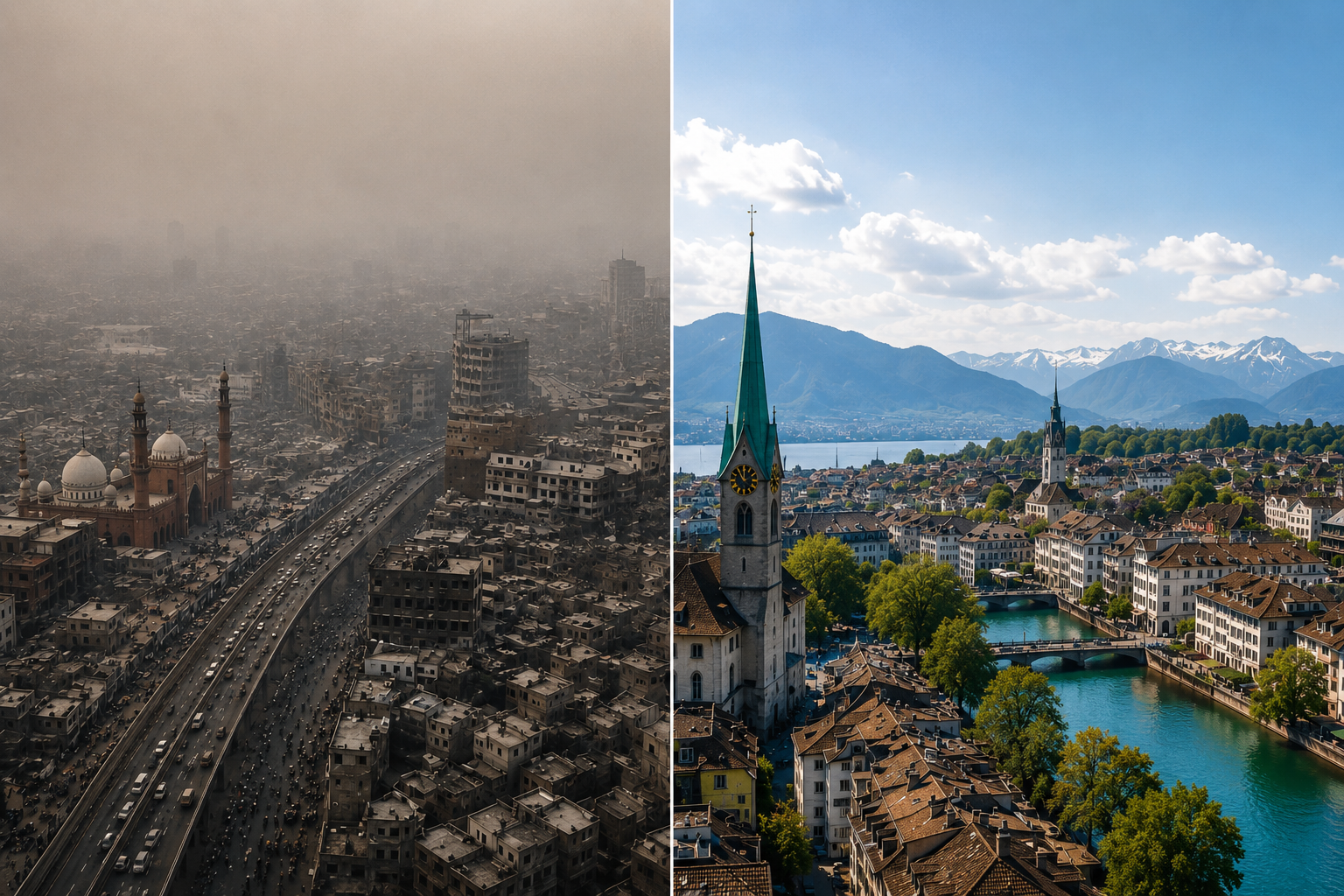
Air quality across the world is constantly changing, and the difference between the cleanest and most polluted cities can shift within just a few hours. According to live data tracked by IQAir, pollution rankings are updated in real time using measurements that combine particulate matter, ozone levels, and other airborne pollutants into a single Air Quality Index score.
The latest readings, pulled at 3 p.m. EST on May 17, captured a snapshot of conditions at that exact moment but experts note that the rankings are never static. Wildfire smoke, traffic congestion, industrial emissions, weather inversions, and seasonal agricultural burning can rapidly change the air people breathe throughout the day.
Cities that wake up with relatively clean air can climb into dangerous pollution levels by evening, while heavily polluted areas may temporarily improve depending on wind movement and weather conditions. The volatility highlights how closely air quality is tied to both human activity and environmental factors.
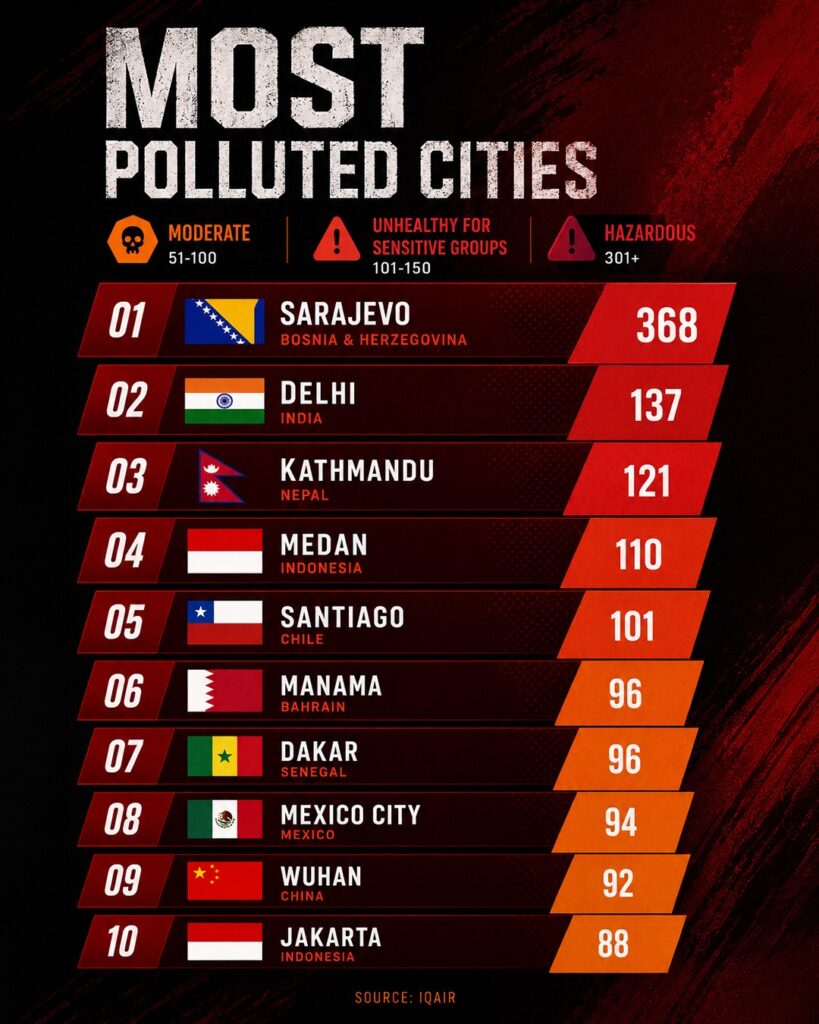
The issue remains a global concern. According to the World Health Organization, around 99 percent of the world’s population lives in areas where air pollution exceeds recommended safety guidelines. Long-term exposure to polluted air has been linked to respiratory disease, cardiovascular conditions, and reduced overall quality of life.
The cleanest cities on most days typically share similar traits: lower industrial activity, strict emissions policies, greener infrastructure, and natural wind circulation that helps disperse pollutants. Meanwhile, the world’s most polluted cities often face the opposite combination, intensified by dense traffic, industrial concentration, and climate conditions that trap harmful particles closer to the ground.
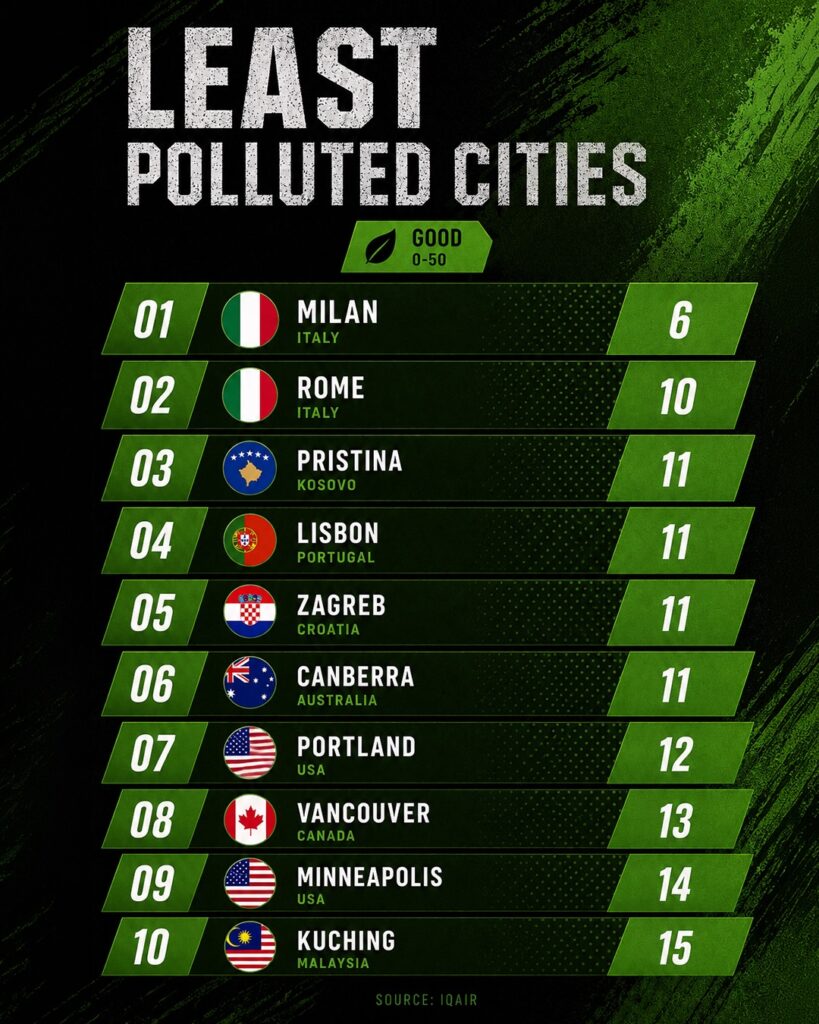
As real-time monitoring technology continues to expand, platforms like IQAir are giving people a clearer picture of how quickly environmental conditions can change and how critical long-term sustainability measures have become for cities worldwide.
